Skip to content
Gerburg Garmann
25/26
Gerburg Garmann is a German-born painter and poet whose work serves as a bridge between academic rigor and visceral creativity. After a distinguished tenure as a professor of Global Languages and Cross-Cultural Studies at the University of Indianapolis, she now channels her deep cross-cultural insights into her artistic practice. A trilingual scholar published in English, German, and French, Gerburg’s creative output is featured in art and poetry anthologies worldwide, reflecting a truly international perspective. Her current work is particularly dedicated to creating evocative, meaningful art that centers on the female experience.
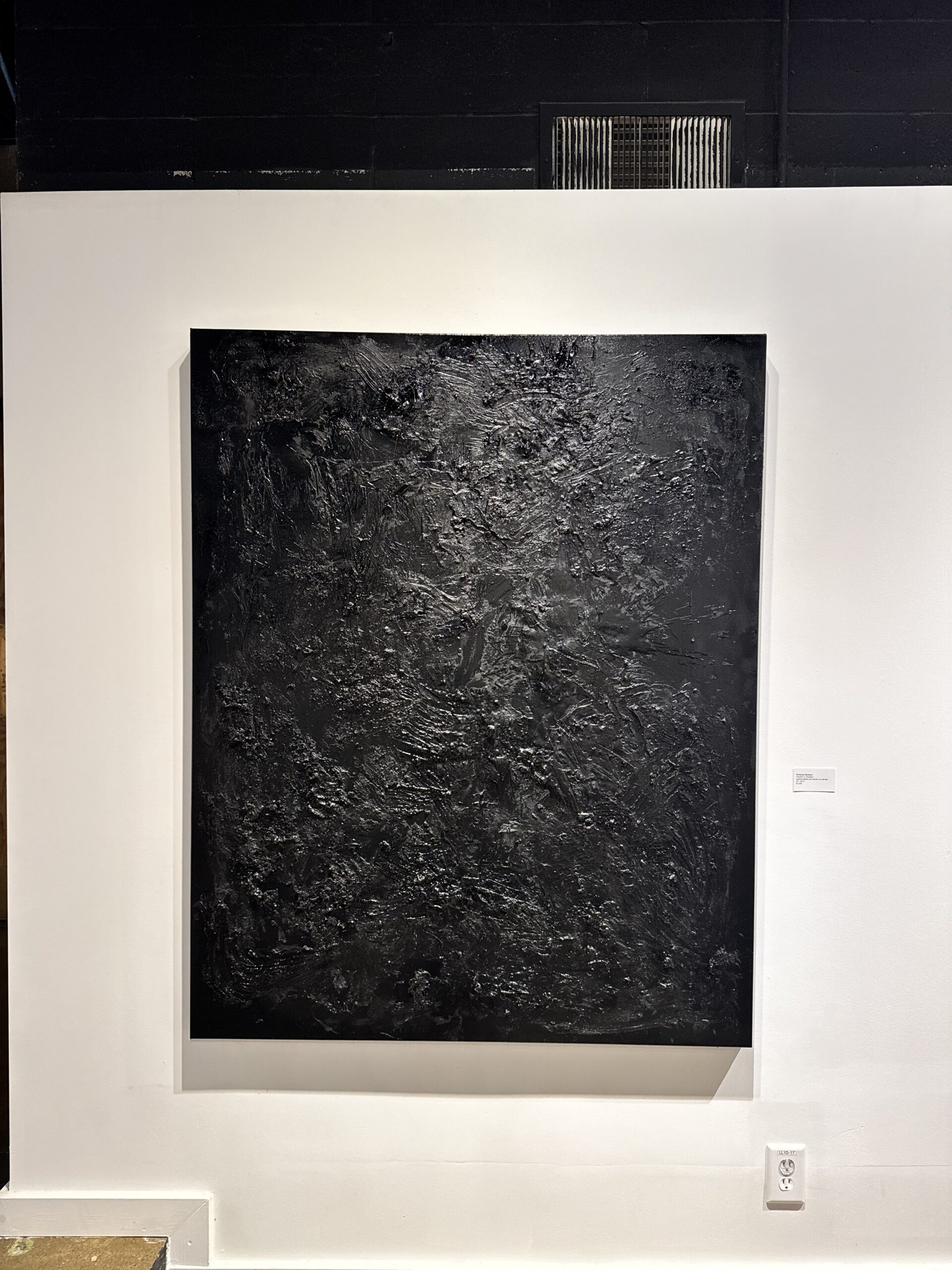
Ablution in Obsidian | sealed plaster and acrylic on canvas | 24x36
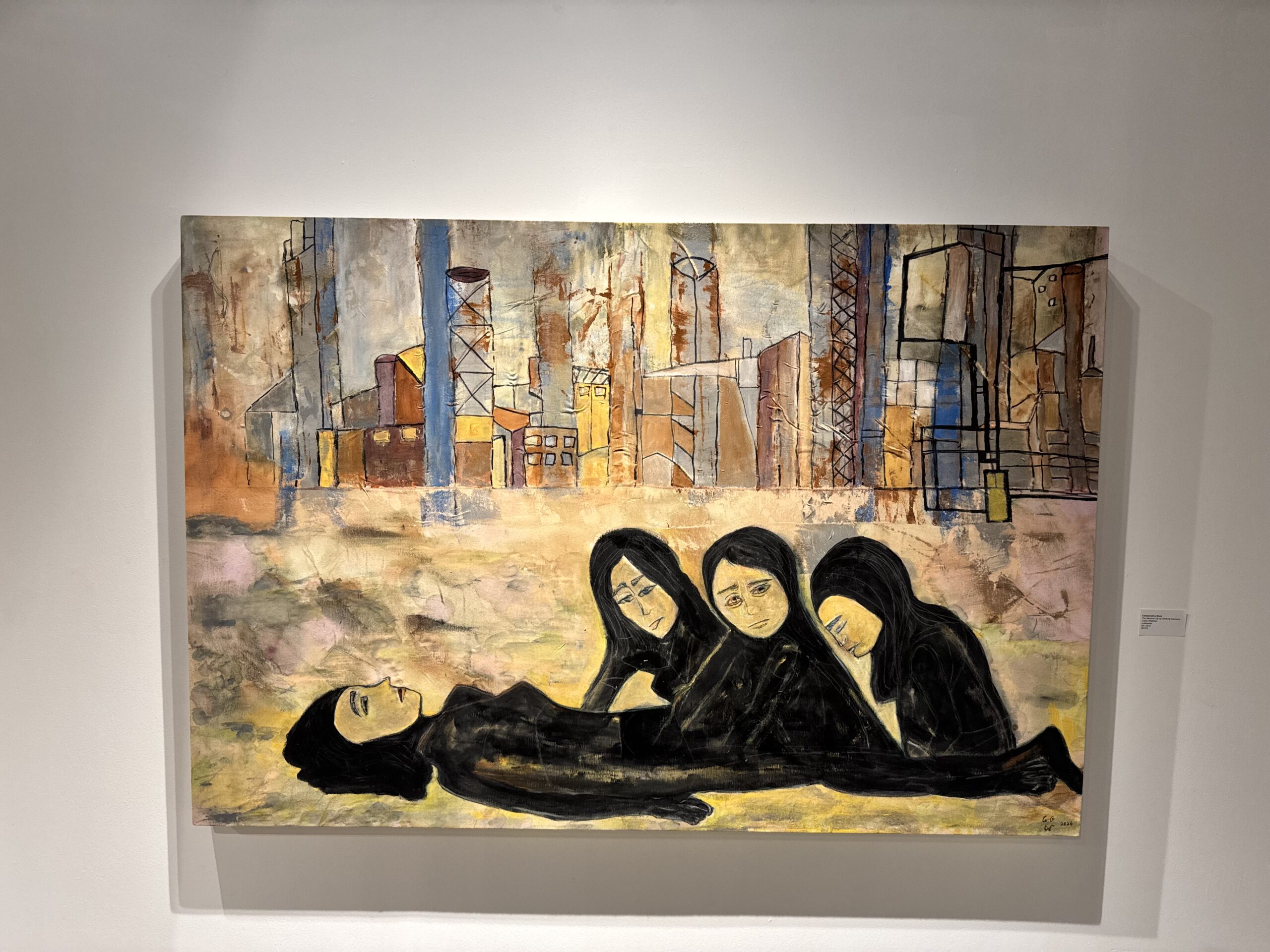
The Matrixial City by Gerburg Garmann and Cecily Walsman | multimedia | 65x45
“Ablution in Obsidian (48 x 60) is an exploration of the “Tapestry of Absence.” By paint-sculpting deep obsidian pigments into a fractured topography of high peaks and shadowed grooves, I seek to move beyond the aesthetic void toward an archaeological representation of moral injury. The work is a visceral response to Emmanuel Levinas’s “excess of evil”—the suffering that overwhelms reason. The harsh, uneven terrain serves as a visual metaphor for the intractable brokenness of human history. Yet this surface also functions as a “Face”: a silent, ethical command for response. In a contemporary political landscape that has violently caricatured the concept of “neighborliness”—reducing the stranger to a foil for identity or a target for exclusion—this piece seeks to reclaim the radical imperative of the Good Samaritan. The grooves within the texture represent the traveler in the ditch, while the jagged paths trace the avoidance of those who “pass by on the other side.” Through this “Face of the Other,” the work demands an ablution—not a physical washing, but a spiritual act of mercy. It invites the viewer to resist the caricatures of our era and “become the neighbor” amidst the darkness. To deepen this engagement, the accompanying poem, Liturgy of the Ditch, serves as a further invitation to the viewer, providing a linguistic bridge to interpret and inhabit the artwork’s ethical landscape.”