Stephanie Corea-Rascon
25/26
Stephanie Corea-Rascon is a student at Indiana University in Indianapolis, Indiana, who will earn her Bachelor of Fine Arts in Drawing & Illustration at Herron School of Art and Design in May 2026. Her art includes informational illustration, children’s book illustration, and other types of illustration. She is most interested in pursuing biological illustration and plans to further her studies after graduation, with a secondary focus in children’s book illustration. She has exhibited her artwork at several local galleries, including the Harrison Center, The Eskenazi Fine Art Center, and the Eiteljorg Museum.
Folk Triptych | mixed media
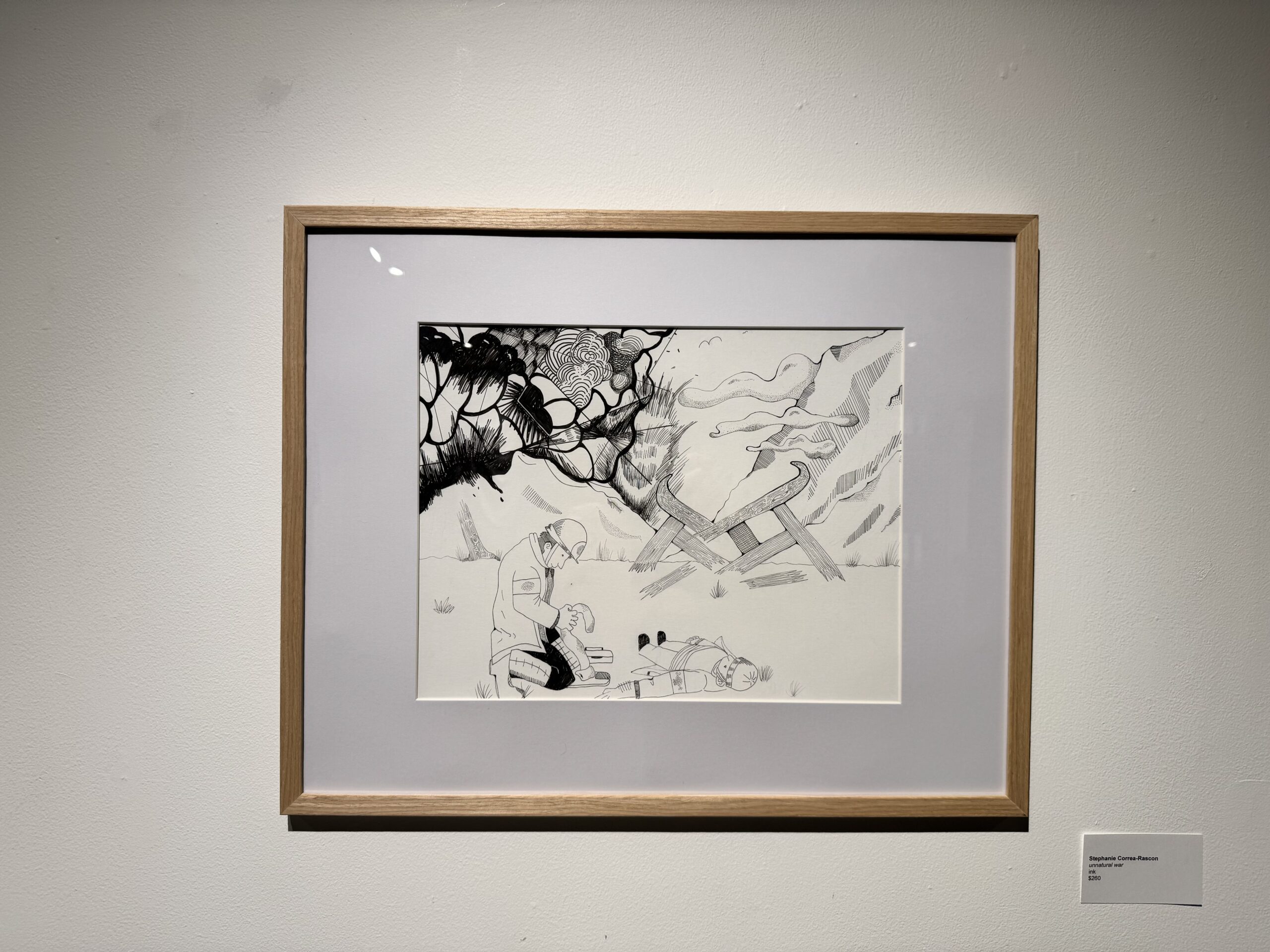
“One of the biggest themes from the story of the Good Samaritan is compassion and sacrificial service toward others, regardless of their background or identity. In the conclusion of the parable, Jesus shares, the audience is left to ponder its meaning and how it might relate to their own lives. It challenges every individual who hears it, regardless of social class, religious identity, or racial identity, to help anyone in need, regardless of who they are, and helps define what it means to be a good neighbor, just as it did before and now. Hacksaw Ridge tells the story of a man named Desmond Doss, who served as a combat medic during World War II and is famous for refusing to carry weapons due to his religious beliefs. Doss saved 75 lives during the Battle of Okinawa, Japan, in 1945, during which he treated and lowered wounded men down a 400-foot cliff, including Japanese soldiers. The artwork is a reflection of the actions of the Good Samaritan in the parable of Jesus and of Desmond Doss. The medic, although inspired by Desmond Doss, represents those who show compassion to others and selflessly serve those who may not deserve it. The medic, identified by the medical symbol on his right arm, tends to the man lying on the ground, who wears a skull symbol on his left arm, indicating they come from different backgrounds and hold different beliefs. Consider the following analogies: the medic as a Latino person and the man lying on the ground as an ICE officer; or the medic as an African American person and the man lying on the ground as a KKK member. The war scene behind the men reflects the chaos and unnatural, hostile atmosphere that comes with warfare. The linework of the war scene is inspired by George Grosz’s Friedrichstraße (plate, folio 3) from Ecce Homo, which contains sharp and bold lines and shading, with a sense of madness and distortion. Lastly, at the very back, an almost hidden view of nature unfolds, featuring mountains and clouds that emerge shyly, with soft shading that captures the natural atmosphere’s comforting, quiet, and untouched spirit.”